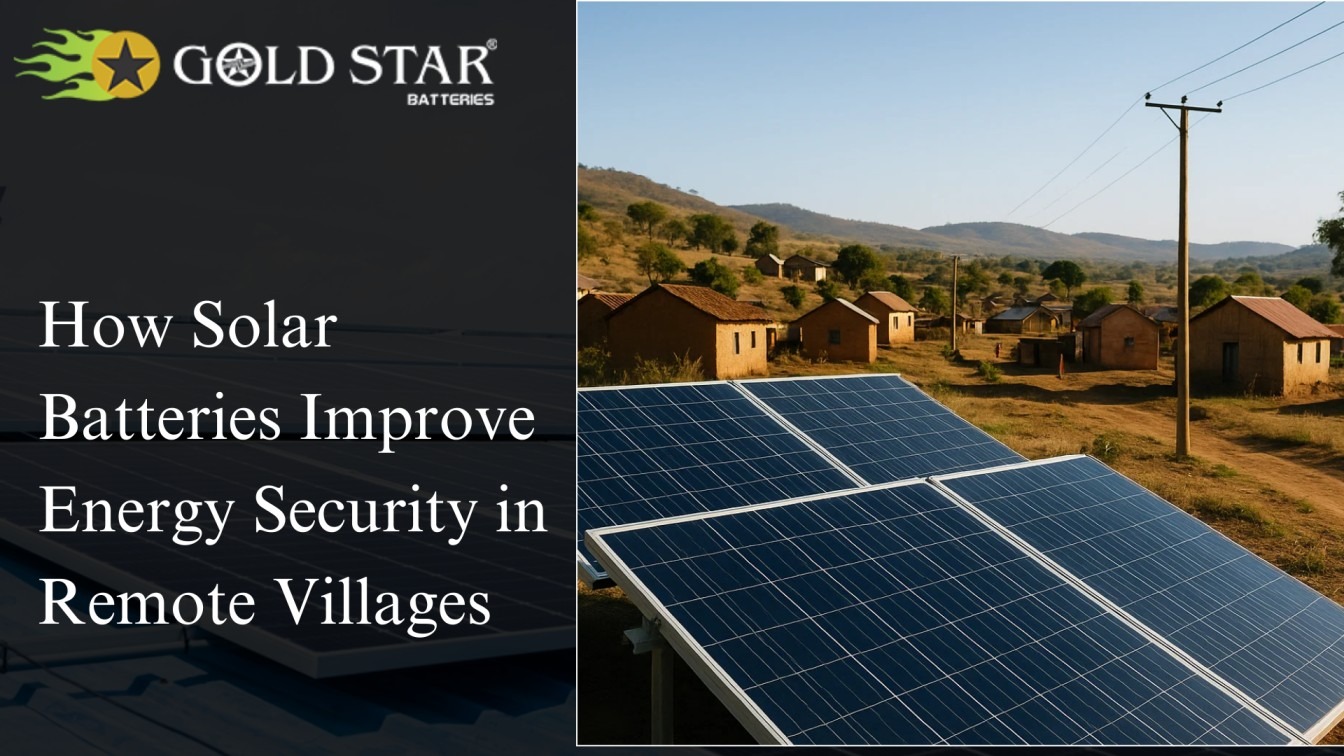
In many remote villages across Africa, especially in Uganda, access to electricity is still a challenge. The national grid often does not reach rural areas, and even where it does, frequent power outages disrupt daily life. In such areas, solar batteries are becoming a game-changer for ensuring energy security.
🔋 What Is Energy Security?
Energy security means having reliable, affordable, and consistent access to electricity. For remote communities, this can power homes, schools, small businesses, clinics, and even agricultural machinery. Without energy security, communities are forced to rely on kerosene lamps, diesel generators, or simply go without power—leading to health hazards, low productivity, and educational setbacks.
☀️ The Role of Solar Batteries
Solar panels alone can generate power during the day, but without a battery to store that energy, it’s lost after sunset. That’s where solar batteries come in. They store excess solar energy and make it available 24/7, ensuring uninterrupted power even when the sun isn’t shining.
In Uganda, many trusted solar battery manufacturers in Uganda have begun offering reliable battery systems specifically designed for rural conditions—tropical weather, dusty environments, and inconsistent usage patterns.
💡 Real-Life Impact in Villages
Lighting & Education: With solar batteries, children can study at night, and schools can use computers and projectors without fear of power cuts.
Healthcare: Clinics in remote villages can now run refrigerators for vaccines, lighting for nighttime emergencies, and basic diagnostic equipment—thanks to solar battery backup.
Economic Upliftment: Shopkeepers can use solar-powered lights, fans, and even basic appliances. Local entrepreneurs can run tailoring machines, mobile charging stations, or agro-processing tools.
Safety & Connectivity: With street lighting powered by solar batteries, villages become safer after dark. Mobile charging and internet access also improve community connectivity.
🛠️ Why Local Manufacturing Matters
Local availability plays a huge role. A reliable solar battery manufacturer in Uganda understands local power challenges, weather conditions, and maintenance needs. Their products are designed to meet the unique demands of off-grid areas while providing easy access to support and spare parts.
With the rise in demand, several solar battery manufacturers in Uganda have developed compact, durable, and easy-to-maintain systems suited for village-level installations. These solutions are not only improving energy access but also reducing dependency on polluting alternatives like diesel.
✅ Final Words
Energy security is not a luxury—it’s a necessity. For Uganda’s remote villages, solar batteries offer the most practical and sustainable path to reliable power. From powering lives to uplifting livelihoods, these batteries are transforming the way rural Uganda lives and works.
📞 Ready to bring reliable power to your community?
Partner with a trusted solar battery manufacturer in Uganda like Gold Star Batteries — built for African conditions, backed by local expertise.
Contact us today and power up your village with smart, sustainable energy.